Military Housing and Leaving Service Accommodation: What You Need to Know
For most serving personnel and their families, the MOD provides housing throughout service. But the clock starts the moment you leave — and the transition to civilian housing is one of the most pressured parts of leaving the Armed Forces.
This guide explains what you are entitled to, how long you have, and what your options are.
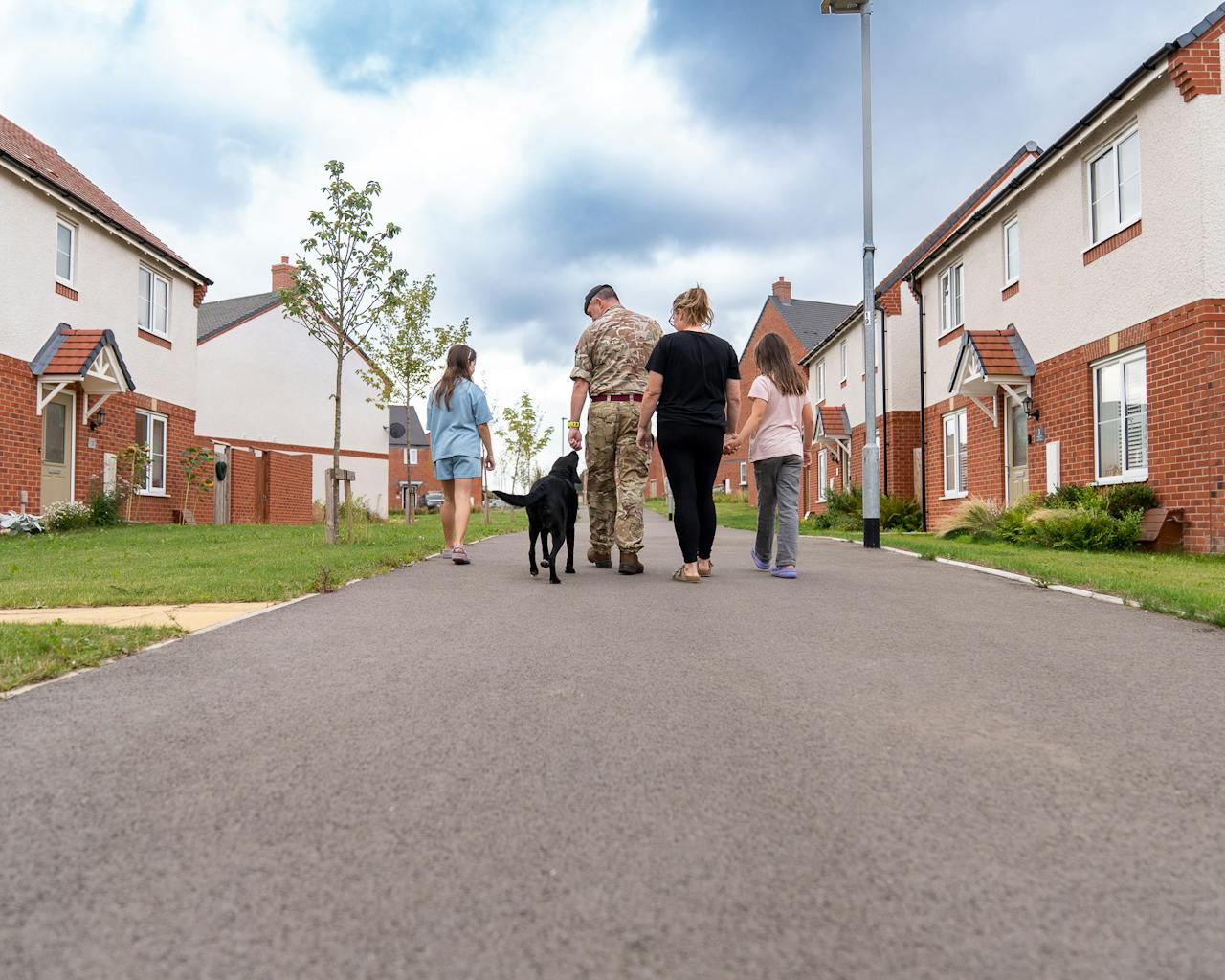
What Is Service Family Accommodation (SFA)?
Service Family Accommodation is MOD-managed housing provided to serving personnel who have dependants — a spouse, partner or children. It is usually located near your base and is subsidised, meaning rent is significantly lower than the equivalent private rental market.
Single personnel live in Single Living Accommodation (SLA). Both are managed by the Defence Infrastructure Organisation (DIO). Standards vary, but the core benefit is the same: affordable, secure housing tied to your posting.
SFA — for serving personnel with dependants (spouse, partner or children)
SLA — for individuals serving without dependants at their posting
Many families supplement or replace SFA with private renting, particularly when stability for children's schooling becomes a priority over proximity to base.
How Long Do You Have to Leave SFA?
⚠ The standard notice to vacate SFA is 93 days from your discharge date — not from when you decide to start planning. In practice, start making arrangements the moment you know your leaving date.
The 93-day period applies whether you are leaving voluntarily, being made redundant, or reaching the end of your service. It does not automatically extend because you have not found somewhere to go.
If your circumstances are more complex — medical discharge, bereavement of a service spouse, or relationship breakdown — the rules may differ. Contact the Joint Service Housing Advice Office (JSHAO) as early as possible. They are the official MOD body for housing advice at transition and can clarify your specific entitlement.
Do not wait for a formal notice to quit before acting. By the time the paperwork arrives, a large portion of your 93 days may already be gone.
Key contact: Joint Service Housing Advice Office (JSHAO) — free, confidential housing advice for service personnel and their families. Aim to contact them at least 12 months before your discharge date if you know it.
Your Housing Options When You Leave SFA
Leaving Service Family Accommodation is one of the most time-sensitive parts of leaving the forces. The support available to you, and the steps you need to take, will vary significantly depending on your personal situation — whether you own a property elsewhere, where you're planning to settle, and how much time you have before you need to move. Most service leavers fall into one of three broad situations. Working out which applies to you early is important, because the right preparation, and the help you can access, looks different in each case.
Buying a Home
If you want to buy, the Forces Help to Buy scheme allows serving personnel to borrow up to 50% of their salary (capped at £25,000) interest-free toward a deposit. This must be applied for while still serving — you cannot access it after discharge.
⚠ If your discharge date is approaching and you have not applied for Forces Help to Buy, do it now. The scheme can be used alongside Shared Ownership and the First Homes scheme.
Veterans who have already left service apply through standard mortgage routes. Some lenders are more familiar with military employment history and pension income than others — a mortgage broker with Armed Forces experience is worth seeking out.
→ See the full Troopr Buying a Home guide
Renting Privately
Private renting is the most common immediate step for service leavers who are not yet ready to buy or are waiting on a social housing application. You have the same legal rights as any UK private tenant — deposit protection, proper notice periods, and protection from unlawful eviction.
A practical challenge is that landlords often ask for references and employment history in a format that does not map onto military service. A letter from your unit confirming service dates and final rank usually satisfies this. If you receive a pension or resettlement pay, get written confirmation to use as proof of income.
If you need help with a deposit, some councils run deposit guarantee schemes for veterans, and charities including SSAFA and the Royal British Legion can sometimes assist with upfront costs.
→ See the full Troopr Renting & Social Housing guide
Social Housing
You do not need to be in crisis to apply for social housing — but waiting lists in most areas are long, so apply early. Veterans have specific protections under the Armed Forces Covenant.
- Local authorities must give additional priority to veterans who left service within the last five years
- Your lack of a local connection cannot be used against you in the way it might be for a civilian applicant
- Tell the council housing department you are a service leaver — ask them to note your veteran status explicitly, as this affects your priority banding
⚠ If you are at immediate risk of homelessness when your 93 days is up, your council has a legal duty to help. Do not wait until you have nowhere to go — approach the housing department as soon as the risk is foreseeable.